
What science says
Animal ethics requires setting intuition aside in favor of proven facts.
What science says scetions INDEX
 1. The Impact on Human Health
 2. Environmental Consequences
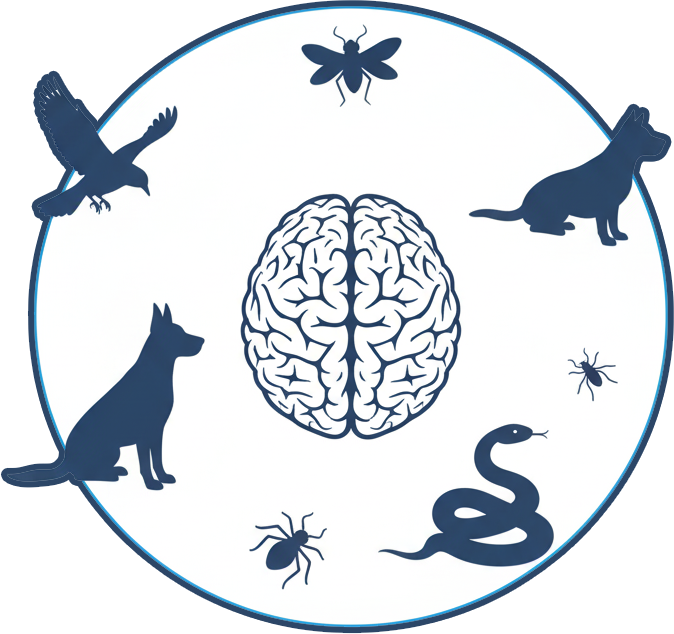 3. Animal Sentience: The Scientific Evidence
 4. Do plants feel pain?
1. The Impact on Human Health
Major global health and dietetic organizations explicitly recognize that well-planned plant-based and vegan diets are healthful, nutritionally adequate, and appropriate for all stages of life, supported by robust clinical trials and long-term cohort studies.
Adequacy Across All Life Stages (Pregnancy, Infancy & Adulthood)
Official positions from major dietetic associations confirm that appropriately planned vegan diets are healthful and nutritionally adequate for all stages of the life cycle, including pregnancy, lactation, infancy, childhood, and adolescence.
| Organization / Source | Country | Position / Scientific Reference |
|---|---|---|
| Academy of Nutrition and Dietetics | USA | Concludes that well-planned vegetarian and vegan diets are healthy, adequate, and appropriate for all life stages. |
| British Dietetic Association | UK | Confirms well-planned plant-based and vegan diets support healthy living at any age. |
| Dietitians Australia | Australia | Recognizes that well-planned vegan diets are safe, adequate, and nutritionally beneficial. |
Controlled Twin Clinical Trials (Stanford TwiNS Study)
A rigorous randomized clinical trial led by Stanford University comparing identical twins (The Twins Nutrition Study) demonstrated that a healthy vegan diet significantly improves cardiovascular health, lowers LDL cholesterol, reduces fasting insulin, and decreases epigenetic markers of biological aging compared to an omnivorous diet.
« In this randomized clinical trial of identical twins, the healthy vegan diet led to improved cardiometabolic outcomes, including significant decreases in low-density lipoprotein cholesterol and fasting insulin compared to the omnivorous diet. »
« The vegan cohort exhibited significant decreases in overall epigenetic age acceleration, aligning with anti-aging effects of plant-based diets over an 8-week period. »
Long-Term Comparative Health Outcomes (EPIC-Oxford & Adventist Studies)
Large-scale prospective cohort studies comparing tens of thousands of vegans and meat-eaters over decades demonstrate that well-formulated plant-based diets result in significantly lower body mass index (BMI), reduced risk of type 2 diabetes, lower blood pressure, and decreased overall cardiovascular incidence.
Source: Critical Reviews in Food Science and Nutrition / PMID: 26853923Muscle Building, Strength, and Athletic Performance
Systematic reviews and clinical comparisons between vegan and omnivorous athletes demonstrate equivalent gains in muscle mass, strength, and physical performance when total protein and caloric intake are properly matched.
Source: British Journal of Nutrition / PMID: 37869973Chronic Disease Prevention and Red Meat Elimination
Major scientific bodies show that eliminating animal flesh and processed meat significantly reduces the risks of ischemic heart disease, type 2 diabetes, and specific types of cancer.
| Organization / Source | Country | Position / Scientific Reference |
|---|---|---|
| World Health Organization (WHO) / IARC | International | Classifies processed meat as carcinogenic and red meat as probably carcinogenic to humans. |
| American Heart Association (AHA) | USA | Highlights the significant reduction of cardiovascular risks through plant-based diets. |
2. Environmental Consequences
Industrial animal farming is one of the main contributors to greenhouse gas emissions, deforestation, and water depletion, exceeding the total impact of global transportation.
Greenhouse Gas Emissions & Complete Transport Sector Comparison
Comprehensive global evaluations (FAO, Science) show that livestock generates massive emissions of methane (CH4, enteric fermentation) and nitrous oxide (N2O, manure and fertilizers). Together, animal agriculture accounts for more greenhouse gas emissions than the entire global transportation sector combined (including all cars, trucks, trains, airplanes, ships, and motorcycles).
Source: Science Journal / FAO - Livestock's Environmental ImpactDeforestation, Habitat Loss, and Land Use
More than 77% of global agricultural land is used for livestock (grazing and animal feed crops) while supplying only a small fraction of human calories. It is the leading cause of Amazon deforestation and biodiversity loss.
Source: Our World in Data / FAO Agricultural ReportsWater Consumption: The Water Footprint of Beef
Producing 1 kg of beef requires an average of 15,400 liters of water. A single beef burger patty (150g) requires roughly 2,300 to 2,500 liters of water to produce—which is equivalent to taking a daily shower for over a month.
Source: Water Footprint Network - Product Gallery3. Animal Sentience: The Scientific Evidence
Neurobiological and ethological research has provided overwhelming evidence that many animals are sentient beings, capable of experiencing emotions, pain, pleasure, and fear, and demonstrating self-awareness.
The Cambridge Declaration
In 2012, a group of international neuroscientists signed the Cambridge Declaration on Consciousness, affirming that non-human animals possess the neurological substrates necessary for consciousness.
Source: The Cambridge Declaration on Consciousness (2012)The New York Declaration on Animal Consciousness
Issued in 2024, this declaration signed by multiple scientists emphasizes strong scientific support for conscious experiences in mammals, birds, reptiles, amphibians, and various invertebrates.
Source: The New York Declaration on Animal Consciousness (2024)4. Do plants feel pain?
The idea that plants possess sentience or a form of consciousness similar to animals is a concept often raised in debates, but it is largely refuted by science.
Plant Sentience Debunked
1. Absence of Central Nervous System
Sentience depends intrinsically on a central nervous system (CNS) and a brain. Consciousness is an adaptation functionally associated with a mobile lifestyle. Plants, as sessile organisms, have evolved physiological strategies that do not require a central nervous system or consciousness.
« Consciousness is an adaptation associated with a mobile lifestyle to assess threats. Plants, as sessile organisms, have evolved physiological strategies that do not require a central nervous system or consciousness. »
« A rigorous evaluation of anatomical and physiological evidence reveals no structures analogous to a central nervous system. Without a nervous system, the criteria required for subjective experiences or feeling pain are biologically absent. »